
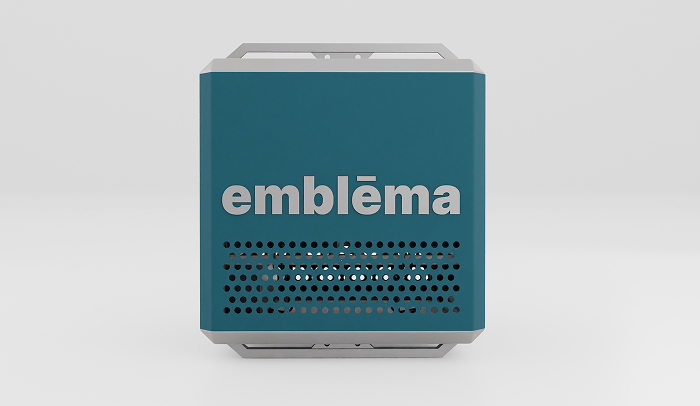
Why Choose On-Premise Deployment
While cloud computing has revolutionized how businesses access computational resources, many organizations are rediscovering the value of on-premise deployment, especially for AI workloads. The reasons are multiple and go beyond simple technological preference.
In regulated sectors such as finance, defense, healthcare, and public administration, direct control over data is not just a best practice — it is a regulatory requirement. On-premise deployment ensures that sensitive data never crosses the boundaries of the corporate infrastructure.
Digital Sovereignty
Digital sovereignty has become a central theme in European IT strategies. With on-premise deployment, organizations maintain complete control over:
- Where data resides: no transfers to external jurisdictions
- Who accesses data: granular authorization management
- How data is processed: full control over algorithms and models used
- When data is deleted: customized retention policies
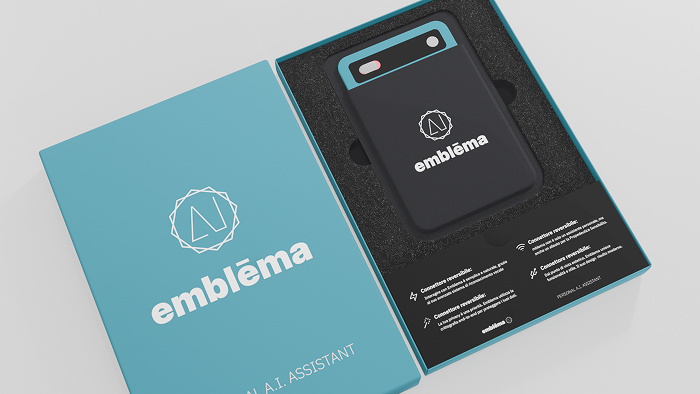
The Emblema On-Premise Architecture
The Emblema AI ecosystem was designed from the ground up to support full on-premise deployment. The architecture is based on orchestrated Docker containers, making installation and maintenance accessible even to smaller IT teams.
Main Components
The ecosystem includes:
- Next.js Frontend: modern, responsive user interface
- FastAPI Backend: high-performance APIs for orchestration
- PostgreSQL: relational database for metadata and configurations
- Milvus: vector database for embeddings and semantic retrieval
- MinIO: S3-compatible object storage for documents and artifacts
- Keycloak: identity management and enterprise single sign-on
- Redis: caching and message queue management
By 2027, 60% of enterprise organizations will implement hybrid AI solutions combining on-premise and cloud resources, up from 25% in 2024, driven by data sovereignty and performance requirements.
Challenges and How to Address Them
Hardware Requirements
AI workloads, especially Large Language Model inference, require specialized hardware. However, the Emblema ecosystem is optimized to run even on commodity hardware:
- CPU-only: for lightweight workloads and embeddings
- Consumer GPUs: for medium-sized model inference
- Enterprise GPUs: for large models and custom training
Management and Maintenance
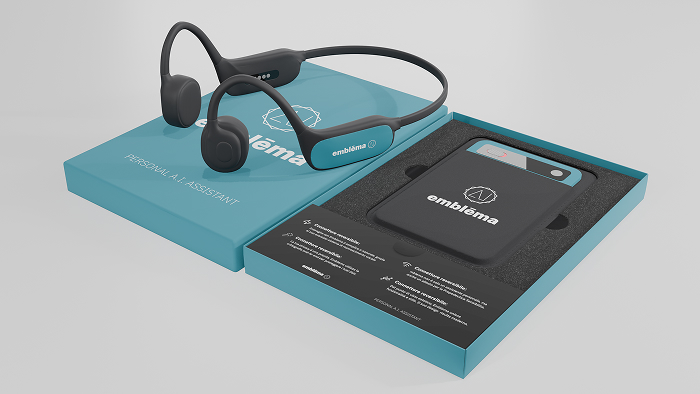
Simplified Updates
With Emblema's containerized approach, updates are simple and minimally invasive. The update process includes:
- Pulling new Docker images
- Automatic database migration
- Automatic rollback in case of issues
- Zero downtime with blue-green deployment
Routine maintenance is automated, reducing the operational burden on the IT team.
Scalability
Even in an on-premise environment, scalability doesn't have to be an issue. Emblema's microservices architecture allows individual components to be scaled based on load:
- Dedicated workers for document processing
- Separate inference pools for different models
- Distributed caching to optimize performance
Best Practices for Deployment
- Resource planning: size hardware based on expected workloads, with room for growth
- Networking: configure dedicated networks for AI traffic, separate from general corporate traffic
- Backup and disaster recovery: implement regular backup strategies for data and configurations
- Monitoring: set up monitoring dashboards for performance, resource usage, and system health
- Security: implement network segmentation, dedicated firewalls, and audit logging
Conclusions
On-premise AI deployment is no longer a complex endeavor reserved for large corporations. With Emblema AI, any organization can implement a complete AI ecosystem within its own infrastructure, maintaining full control over its data and operations.
The key to success lies in choosing a platform designed for on-premise deployment from the start, not as an afterthought to a cloud-first solution. Emblema AI offers exactly this: enterprise power, operational simplicity, and total data sovereignty.